
Thoracic Spine Manipulation Using the Manuthera
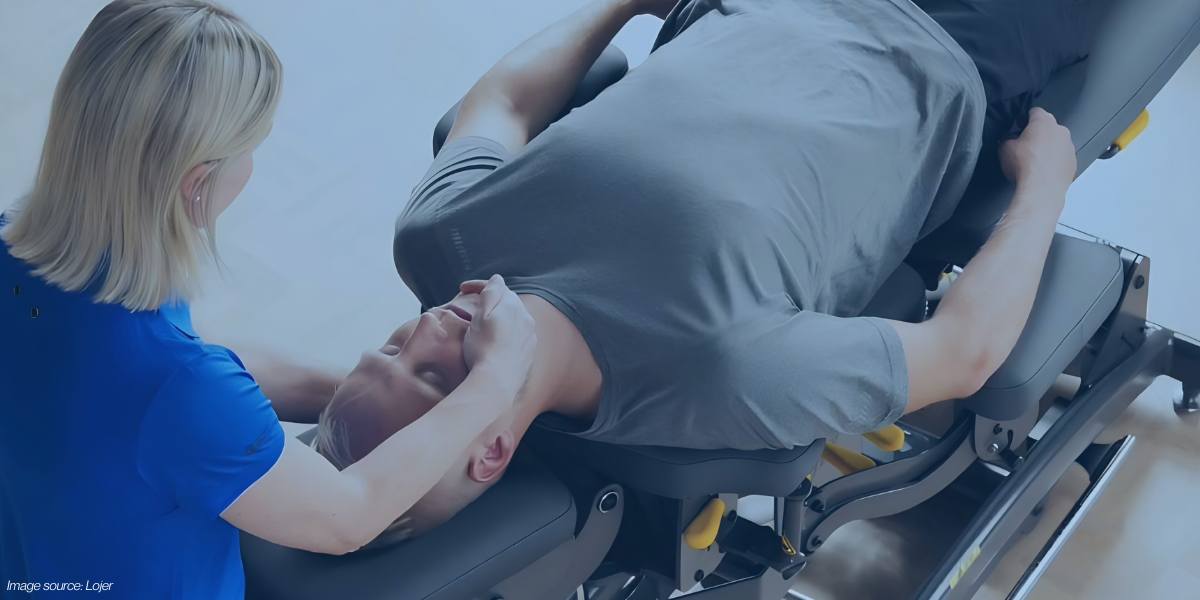
Thoracic spine manipulation is most effective when positioning, movement, and clinician control work together. The Manuthera 242 supports this by combining tilt, flexion, lateral bend, and dynamic motion into one treatment system, helping clinicians deliver more precise thoracic techniques with less physical strain.
Why Thoracic Mobility Matters
Restrictions in the thoracic spine can affect posture, rib movement, breathing mechanics, shoulder function, and overall spinal mobility. Improving thoracic movement can help reduce stiffness, improve range of motion, and support more efficient treatment of the upper body.
The Manuthera 242 is designed to support thoracic treatment through controlled positioning and movement, making it easier to work more specifically and more comfortably than on a static treatment surface.
Step 1: Prepare the Patient and Table
Begin by positioning the patient comfortably and adjusting the Manuthera 242 to the correct working height. Good setup is essential for both patient comfort and clinician ergonomics.
- Adjust table height to suit your working posture
- Position the patient securely and comfortably
- Ensure all relevant sections are correctly locked before movement begins
Starting from a stable, supported position allows thoracic techniques to be introduced more gradually and with greater control.
Step 2: Use Manuthera Tilt for Controlled Positioning
The Manuthera 242 tilt function allows clinicians to use gravity to assist thoracic positioning rather than relying purely on manual force. This helps create a more stable and supported setup before manipulation or mobilisation is applied.
By adjusting the angle of the table, clinicians can improve patient relaxation and achieve a more precise starting position for thoracic segments and rib structures.
Step 3: Combine Flexion and Lateral Bend
One of the key strengths of the Manuthera 242 is its ability to support combined movement. Thoracic treatment often benefits from introducing controlled flexion and lateral bend to expose movement restrictions and improve access.
- Flexion: supports thoracic mobility and segmental access
- Lateral bend: helps target asymmetrical restriction
- Combined movement: improves treatment specificity
Rather than forcing a position manually, the table helps create it with greater consistency and less strain.
Step 4: Use Dynamic Motion for Soft Tissue Access
Thoracic dysfunction often involves not only joint restriction but also muscular tension. The Manuthera’s dynamic movement allows clinicians to gain better access to deeper tissues and surrounding thoracic structures.
This is especially valuable where thoracic stiffness is linked with rib restriction, postural tension, or upper back discomfort.
Step 5: Reassess Response and Comfort
After each movement or technique, reassess how the patient responds. Small changes in angle and support can significantly influence both comfort and precision.
- Monitor patient comfort throughout
- Check for improved thoracic range of motion
- Adjust tilt and positioning gradually as needed
Why Use the Manuthera 242 for Thoracic Treatment?
Compared with a static table, the Manuthera 242 gives clinicians more options to position and treat the thoracic spine accurately. Its dynamic movement capabilities support:
- Improved thoracic treatment precision
- Better access to ribs and surrounding tissues
- Enhanced patient comfort during treatment
- Reduced physical effort for the clinician
A More Advanced Approach to Thoracic Manipulation
Thoracic manipulation is not just about technique. Positioning, control, and patient support all influence the quality of treatment. The Manuthera 242 helps clinicians work more dynamically, more specifically, and with greater confidence across a range of thoracic applications.
Looking to support more advanced thoracic treatment?
Discover how the Manuthera 242 can help clinicians deliver precise, comfortable, and versatile thoracic mobilisation and manipulation techniques.