

Step-by-Step Lumbar Spine Mobilisation
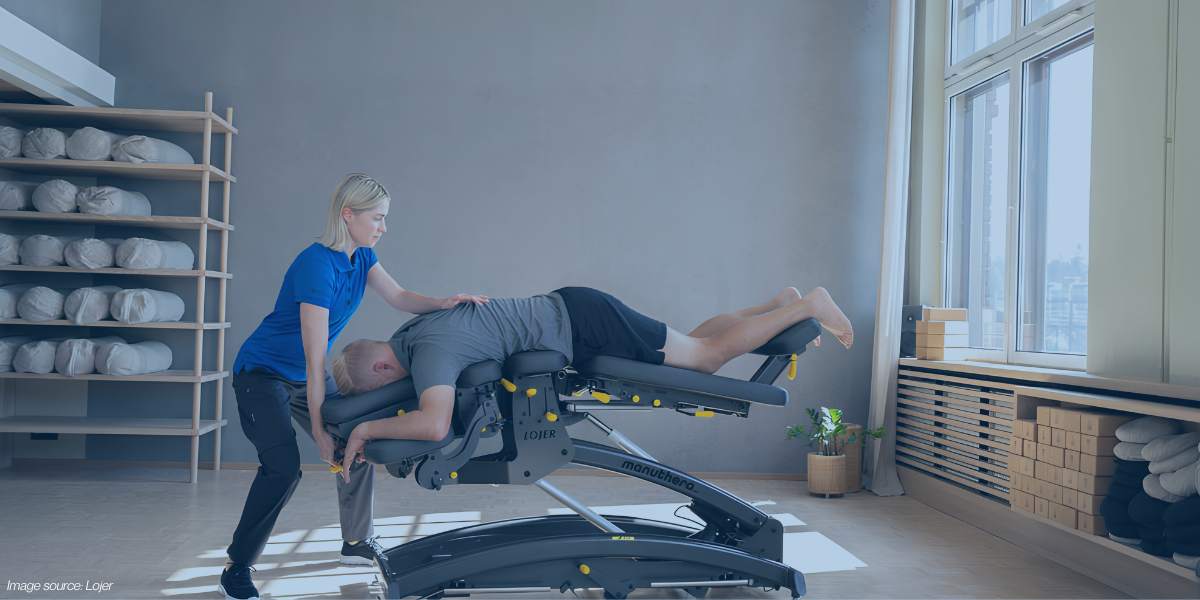
Lumbar spine mobilisation requires precision, control, and patient comfort. With the right setup, clinicians can use flexion distraction, side bend, rotation, and decompression to create a more targeted and effective approach to lower back treatment.
Why Lumbar Mobilisation Matters
The lumbar region is frequently affected by stiffness, pain, disc-related symptoms, and reduced functional movement. Effective mobilisation helps improve joint motion, reduce guarding, and create better conditions for treatment progression.
Dynamic treatment systems can support this process by allowing controlled movement through flexion, lateral flexion, rotation, and traction-based positioning. This creates more options for treating the lumbar spine, pelvic region, sacrum, and surrounding soft tissues.
Step 1: Prepare the Patient and Table
Before beginning lumbar mobilisation, ensure the patient is positioned comfortably and the table is stable. The Manuthera 242 is designed for professional healthcare environments and provides height and tilt adjustment, as well as multiple lower-body movement functions to support mobilisation treatment.
- Adjust table height for clinician ergonomics
- Position the patient securely and comfortably
- Check that all relevant sections are correctly locked before beginning
Step 2: Introduce Flexion for Lumbar Mobility
Lumbar mobilisation often begins by introducing controlled flexion. This helps reduce stiffness and prepares the lumbar region for more specific movement-based techniques.
The Manuthera 242 lower body section supports extension and flexion adjustment, allowing clinicians to change the treatment angle with more control and less manual strain.
Step 3: Add Side Bend and Rotation
Once the patient is relaxed and the lumbar area is prepared, side bend and rotation can be introduced to improve movement in multiple planes. This is especially useful where lumbar restriction involves asymmetry or segmental stiffness.
- Lateral flexion: helps target side-specific restriction
- Rotation: supports more precise segmental mobilisation
- Combined movement: improves specificity and treatment adaptability
Used carefully, these movements can help clinicians access structures that are harder to influence on a flat, static treatment surface.
Step 4: Use Decompression and Traction Thoughtfully
Decompression-based positioning and traction can be integrated to reduce compressive loading and support more comfortable lumbar treatment. The brochure highlights smooth flexion distraction with side bend, rotation, and decompression as key lumbar treatment opportunities on the Manuthera 242.
Lower body traction and related adjustments should be used with care and with all locking functions correctly managed. Always ensure the section is properly locked when traction is not in use.
Step 5: Reassess Comfort and Response
Throughout treatment, reassess how the patient responds to each adjustment. Lumbar mobilisation should feel controlled and supported, not forced. Small changes in angle and positioning can make a significant difference to comfort and treatment precision.
- Check for reduced guarding
- Monitor range and ease of movement
- Adjust positioning gradually as needed
Clinical Benefits of a Dynamic Approach
Compared with a static treatment couch, a dynamic mobilisation platform gives clinicians more options to position and treat the lumbar spine with greater specificity. This can support:
- Improved treatment precision
- Better patient comfort
- Enhanced access to deeper tissues
- Reduced physical strain for the clinician
A More Versatile Way to Treat the Lumbar Spine
Lumbar mobilisation is rarely one-dimensional. A table that supports flexion distraction, side bend, rotation, and decompression gives clinicians a more versatile and responsive way to treat lower back dysfunction. For practices focused on spinal care, that flexibility can make a meaningful difference in both treatment delivery and patient experience.
Looking to support more advanced lumbar treatment?
Discover how the Manuthera 242 can help clinicians deliver precise, comfortable, and versatile lumbar mobilisation techniques.